Inclusive Governance

Inclusive governance ensures that people can shape the decisions that affect their lives and hold institutions accountable for delivering equitable development.

Our Approach to Inclusive Governance

Governance concerns how decisions are made, who has a seat at the table, and how power and resources are shared. Inclusive governance means that people, including those often pushed to the margins, can have a genuine say in the choices that shape their lives and can hold institutions to account. Across Africa, economic growth has not always reached everyone, in part because too many people remain excluded from decision-making. Strong policies can only deliver inclusive development when the institutions responsible for them are open, accountable, and responsive.

At INCLUDE, we see inclusive governance as central to making inclusive development possible. Good policies rarely succeed on their own: they require coalitions of committed actors across government and society who can navigate the resistance that change often brings. Our work gathers evidence on how citizens, civil society, and governments can hold one another to account and share power, with attention to whether young people, women, and other excluded groups can shape the decisions that affect them and share in what those decisions deliver.

Our Inclusive Governance Programmes

Finished programme

Digital divides or dividends? Including basic services is Africa’s digitalisation agenda

This research programme has been designed to gather important information to support the effective digitalisation of basic services in Africa.
Finished programme

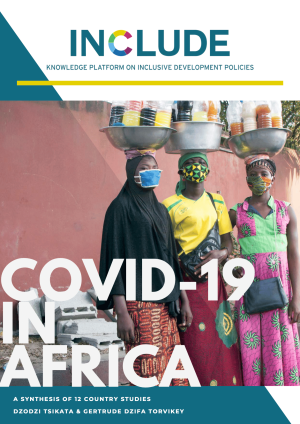
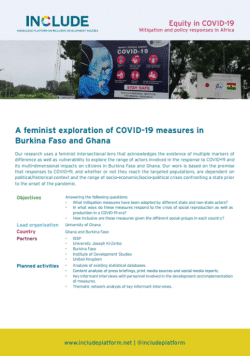
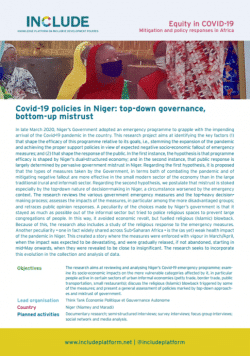
Equity in COVID-19

This research programme systematically reconstructs, documents and analyses the mitigation measures, policy responses and interventions by national governments and non-state actors in twelve African countries in response to the COVID-19 pandemic.
Finished programme

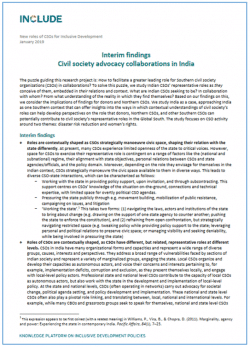
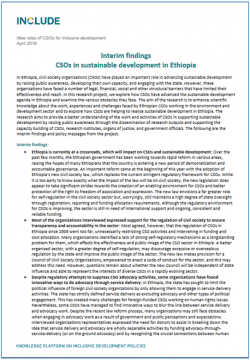
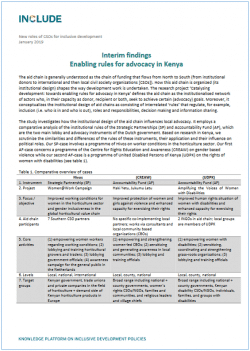
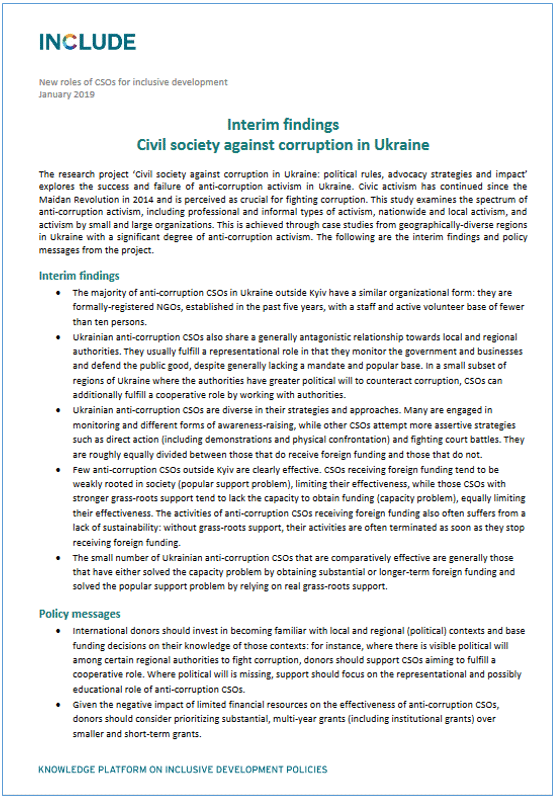
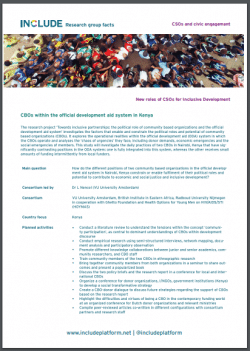
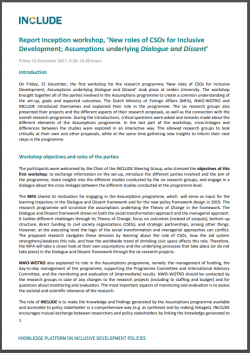
New Roles of CSOs for Inclusive Development

Investigating the assumptions of the Theory of Change underlying the Dutch Ministry of Foreign Affairs’ civil society policy framework ‘Dialogue & Dissent’.

Finished programme

Research for Inclusive Development in Sub-Saharan Africa

This programme supported research that led to practical advice and policy descriptions for more inclusive African development through structural transformation.

More on Inclusive Governance

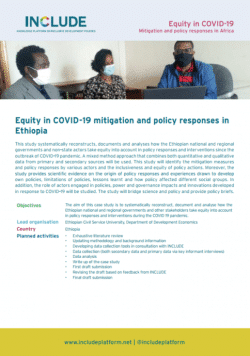
COVID-19 policy responses and equity impact in Ethiopia
By Kassa TeshagerandTesfaye Chofana
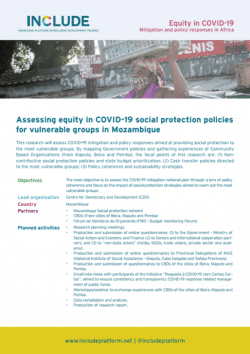
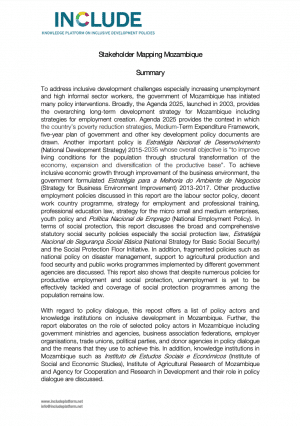
Mozambique Country Case Study cover
Mozambique Country Case Study
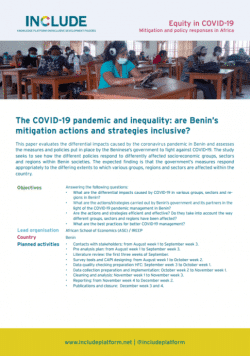
Benin Country Case Study
Uganda Country Case Study
Synthesis Report: Africa’s COVID-19 Responses
By Dzifa Torvikey
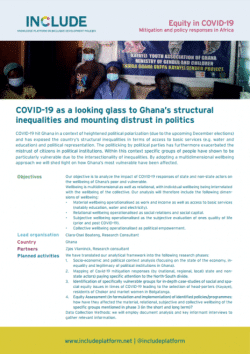
COVID-19 in Ghana
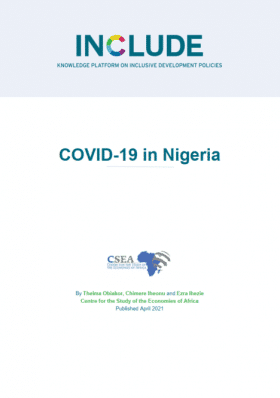
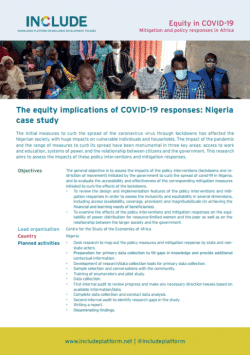
COVID-19 in Nigeria
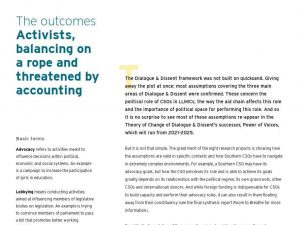
Assumptions in the spotlight
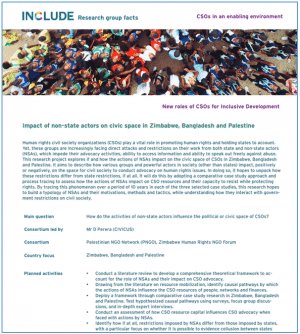
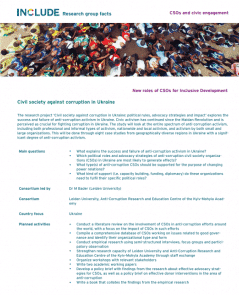
Examining the impact of non-state actors on civic space
+2
By S R Khan +2 more
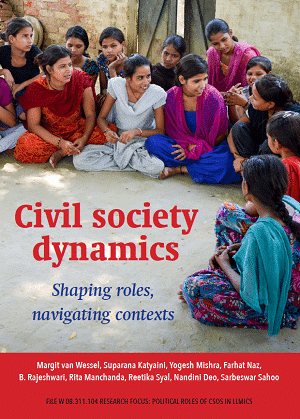
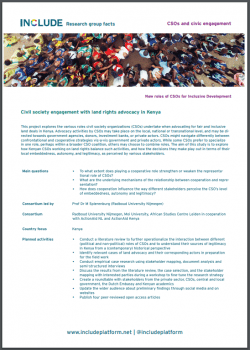
Civil society dynamics: Shaping roles, navigating contexts
+7
By S Katyaini +7 more
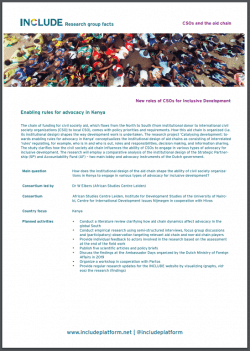
Catalysing development: towards enabling rules for advocacy
+4
By L Schulpen +4 more
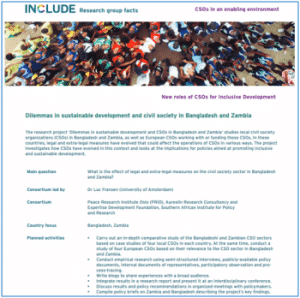
Research group facts – Fransen
By Luc Fransen
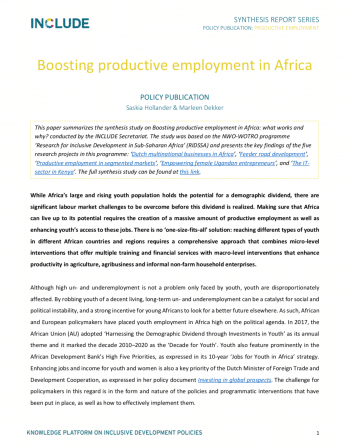
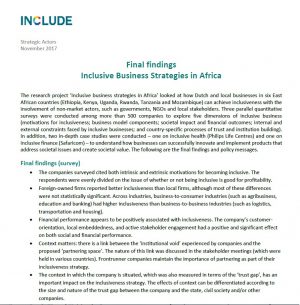
Final findings: Feeder road development
By M LeungandC Rammelt
Final findings: Economic empowerment and sex work
By L NencelandI Sabelis
Research group facts – Spierenburg
By M Spierenburg
Research Group Facts – Shiferaw
By B Shiferaw
Stakeholder mapping Uganda
Stakeholder mapping Ghana