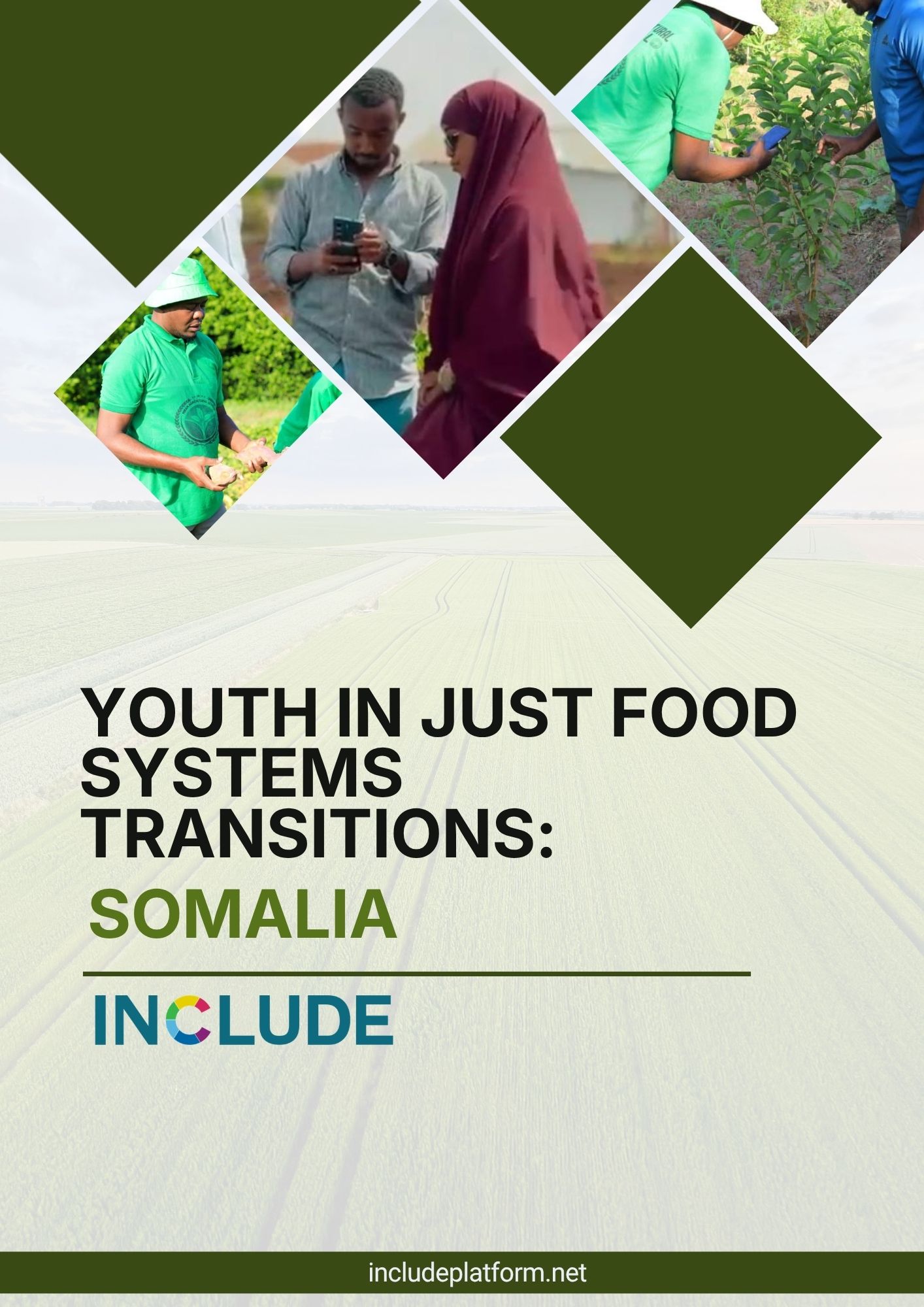
New case study from INCLUDE’s Research programme Youth in Just Food Systems Transition on food systems in Somalia by Dr.Shariff Osman, Dr. Faisal Maaxiye and Dimitris Symeonidis.
Somalia’s food system operates under compounding crises. Prolonged armed conflict, repeated climate shocks, and extreme import dependency have destroyed the country’s infrastructure, displaced over four million people, and eroded the institutional capacity needed to govern a food system transformation.
Emerging green economy opportunities in livestock value addition, solar-powered agriculture, and mobile-enabled market platforms offer genuine pathways to youth employment. But without addressing conflict legacies, land dispossession, exclusion from decision-making, and unequal power relations, these opportunities risk benefiting already-advantaged groups while reproducing historical exclusions under the language of inclusion.
This case study identifies thirteen distinct youth profiles with different needs, highlighting why one-size-fits-all interventions often fail. It further uncovers important tensions between clan-governance, donor-dependence and the development-security nexus. Most importantly, in fragile and conflict-affected contexts, restorative justice must come before market-based solutions.