The INCLUDE case studies highlight both the challenges and opportunities of advancing a just food systems transition in Africa, with meaningful youth engagement at its core.
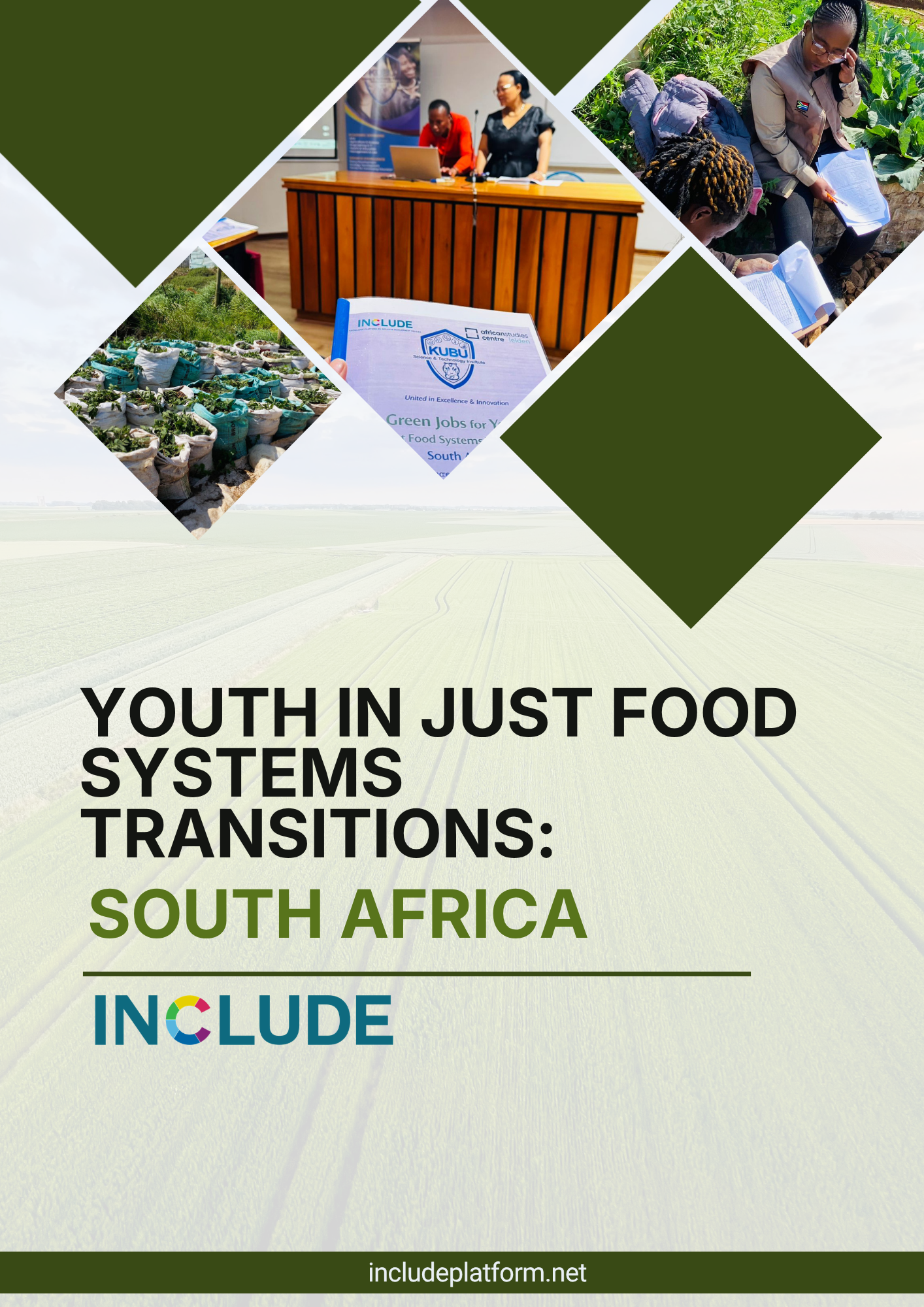
Based on evidence from the Eastern Cape and Gauteng Provinces, this study examines how skills, digital access, institutional dynamics, and gender relations shape youth inclusion in South Africa’s food systems transition.
Evidence shows that the on-going transition is not translating into accessible employment opportunities for youth. Youth exclusion from employment opportunities in the food system is not primarily a skills deficit, but a function of how access to opportunities is structured and governed. A political economy perspective reveals that opportunities are mediated by unequal access to assets, institutional gatekeeping, and gendered power relations that determine whether capabilities translate into livelihoods.
Without deliberate intervention to address these constraints, the transition risks reproducing existing inequalities. However, with coordinated and targeted reforms that align skills, markets, and governance.
The researchers conclude with the following recommendations how South Africa’s food system can become a viable pathway for inclusive green employment:
- Re-align skills systems with value-chain demand
- Target structural barriers to youth enterprise entry
- Move from digital access to market integration
- Implement gender-transformative interventions
- Strengthen coordination and youth participation in governance