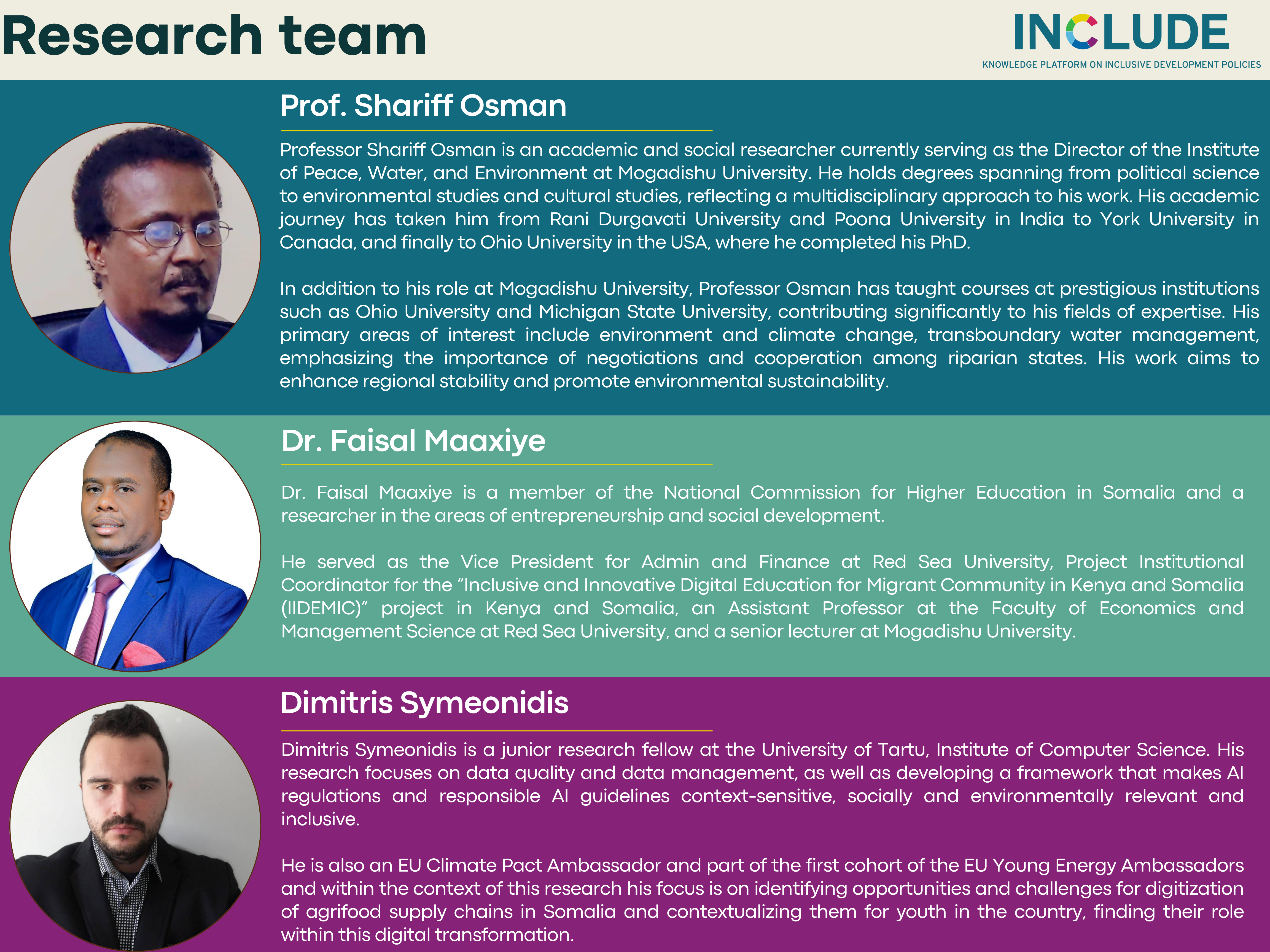
This research project is part of the INCLUDE programme Youth in Just Food Systems Transitions. The research programme is supporting five country case studies to analyse the drivers and barriers of “just” food systems transitions in Africa, specifically zooming in on strategies to create decent livelihoods for young women and men.
Project Summary
The project A Holistic and Inclusive Roadmap to Just Food Systems in Somalia sets out to design an agrifood system and policy framework that fits Somalia’s needs, one that is just, inclusive, and centred on young people. The timing is crucial because Somalia’s food systems are under pressure. The country is facing a complex situation marked by the persistent threat of terrorism, ongoing political instability, and a deepening humanitarian crisis driven by natural disasters.The country is experiencing a severe drought emergency and has been impacted by recent floods, which displaced millions and caused deaths. As a result of these intersecting issues, a large percentage of the population requires humanitarian assistance, faces food insecurity, and is internally displaced. Additionally, prices for food and fuel have risen sharply.
To design a just food systems roadmap for Somalia, the research team uses a design science research (DSR) approach. It starts with comprehensive, multivocal literature reviews to gather global best practices. From there, the team conducts thematic analyses, meta-synthesis, surveys, and key informant interviews. More than 100 Somali youth and general community members from Mogadishu, Hirshabelle, South-West, Jubaland, and Puntland participated, along with elders, leaders, and over 50 policymakers.
The resulting framework aims to cover a wide range of aspects, including: education, agriculture, climate adaptation, gender equality, human rights, and digital transformation. It will be organized around the four central justice dimensions of the INCLUDE research programme: distributive, procedural, recognition, and restorative justice.
Why This Project Matters
Somalia faces significant and interconnected vulnerabilities. The country depends on imports for over 90% of its grain, and only 2% of young people are enrolled in university. Female literacy sits at just 26%. Add to that recurring climate shocks, political instability, Al-Shabaab threats, and the displacement of more than two million rural residents, and the resilience of Somalia’s food systems becomes even more fragile.
This study fills an important research gap in East Africa by digging into the structural barriers that hold back food system transformation including issues like displacement, digital exclusion, and limited job opportunities. At the same time, it spotlights promising avenues for progress: green jobs, regenerative agriculture, and growing agripreneurship among young people.
The study’s literature review already revealed that strengthening youth participation will require reskilling programmes, inclusive policy processes, and better access to digital tools. A key target is ensuring that women make up at least 40% of these efforts. Together, these interventions aim to improve food security, expand economic opportunities, and support a fairer and more sustainable development path for Somalia.